The innovation cycle: from research to market
Seven stages, from the first concept (TRL 1) to the industrialised product (TRL 9 and beyond).
- TRL 1Basic principles observed
- TRL 2Technology concept formulated
- TRL 3Experimental proof of concept
- TRL 4Technology validated in the laboratory
- TRL 5Technology validated in a relevant (industrial) environment
- TRL 6Technology demonstrated in a relevant (industrial) environment
- TRL 7System prototype demonstrated in an operational environment
- TRL 8System complete and qualified
- TRL 9Actual system proven in an operational environment (competitive manufacturing, commercial deployment)
From vision to industrial reality
We work as a hub that turns technological challenges into industrial development opportunities, with an approach combining scientific, technological and managerial expertise. We support companies and institutions along the entire cycle: from basic research to experimental development, from prototyping to industrial validation, through to technology transfer and the valorisation of results.
What we do, stage by stage
The diagram above shows the path. Here is the concrete work we carry out at each of the seven stages: open the one you are interested in.
1Ideation+
2Design+
3Research and Development+
4Prototyping+
5Validation+
6Technology transfer+
7Industrialisation+
Intellectual property, from day one
Dealing with patents at the end of the journey is the most effective way to find out too late that someone got there first. That is why intellectual property enters at stage one and never leaves.
The three routes to market
The same laboratory result can become a medical device, a cosmetic or a food supplement. These are three different regulatory pathways, with different costs, timelines and obligations: choosing well at the outset changes the project.
Class I medical device
Regulation (EU) 2017/745- Device classification and identification of the risk class
- Technical documentation and clinical evaluation
- Conformity assessment and declaration
- Unique Device Identification and registration
- Post-market surveillance
Notified cosmetic product
Regulation (EC) 1223/2009- Formulation and verification of permitted ingredients
- Product Information File
- Cosmetic Product Safety Report
- Notification through the European CPNP portal
- Labelling and placing on the market
Food supplement and nutraceutical
Regulation (EC) 1924/2006 and Novel Food rules- Composition and verification of the substances used
- Permitted nutrition and health claims
- Assessment of the need for novel food authorisation
- Notification to the competent authority
- Compliant labelling and placing on the market
Scaling up
This is where most projects stall: what works in a laboratory flask does not automatically work in an industrial reactor. It takes engineering, not optimism.
Scale-up engineering and process design
We transfer processes from laboratory to industrial scale using a Quality by Design approach and process analytical technologies, defining what has to be kept under control and within which limits.
The technologies that speed up the journey
Digital tools we use inside projects, not as a showcase: they serve to reduce the number of trials, to see problems earlier and to protect data.
Predictive models and data analysis
Machine learning to predict performance and reduce the number of experimental trials, pattern recognition in laboratory data, quality prediction.
Computer vision for quality control
Automated in-line inspection, defect detection, waste reduction and traceability of the control process.
Sensors and digital twin
Monitoring of process parameters, predictive maintenance, digital replica of processes and plants to simulate scenarios before building them.
Traceability and data security
Distributed ledgers for supply-chain traceability and origin certification, secure data architectures, access control, audit trail and GDPR compliance.
For the list of completed and ongoing projects and for any detailed information, contact us: we provide it directly.
Monitoring
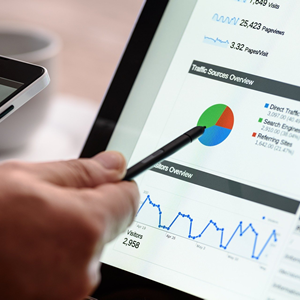
Project activities

Management
Project management

Technical assistance

Training

Research, Development, Innovation, Industrialization